How Andrea O'Connell Is Inspiring the Next Generation of Electricians

Trade Hounds
Women make up just 2.9% of electricians in the United States, according to the U.S. Bureau of Labor Statistics. While they remain underrepresented in the field, tradeswomen like Andrea O'Connell are helping reshape perceptions of who belongs on the job site.
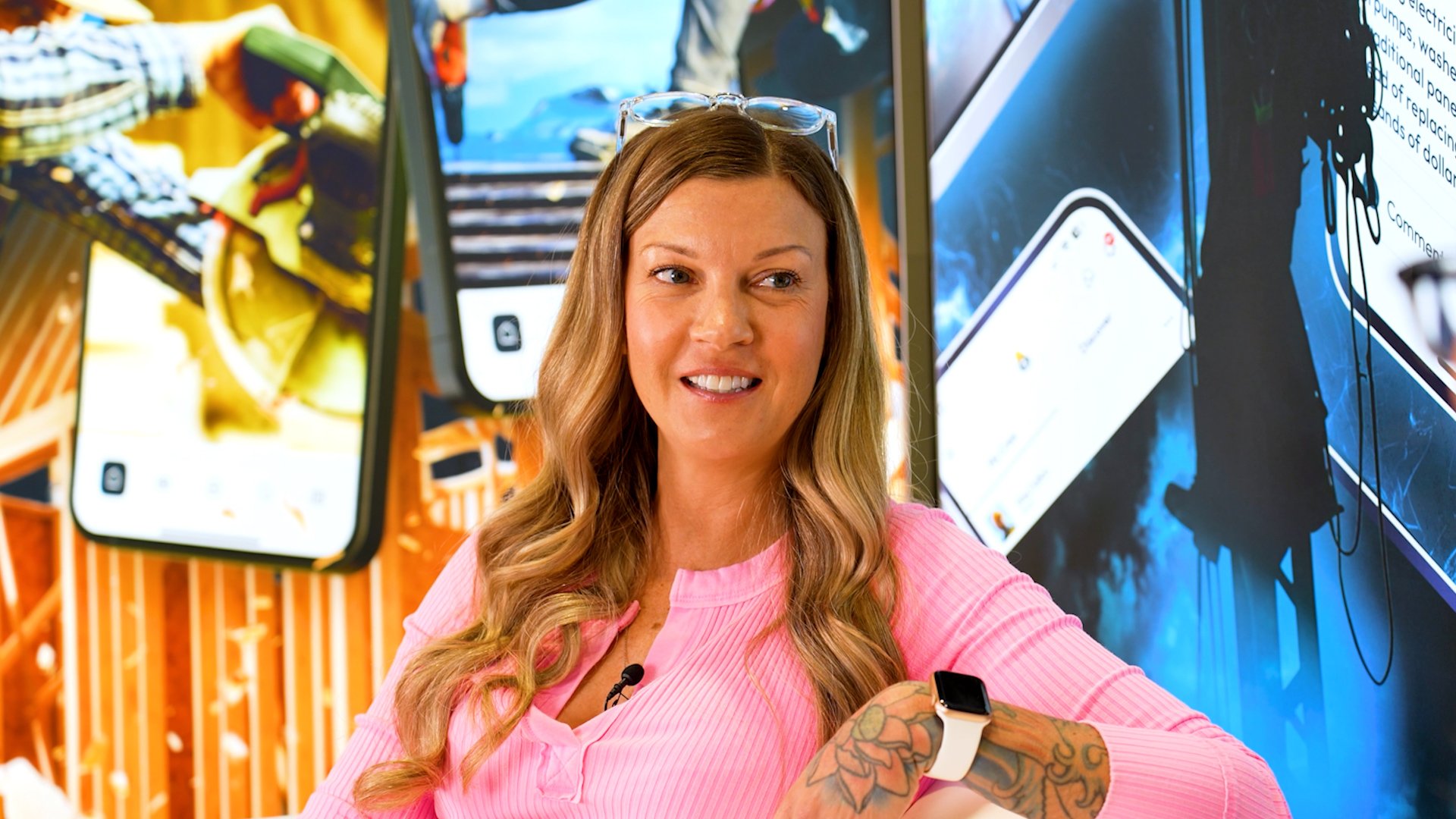
Known online as That Electrician Chick, Andrea has built a following by sharing her journey from apprentice to electrician and encouraging more people to explore careers in skilled trades.
At NECA 2025, Trade Hounds VP of Marketing Jeanette Abrahamsen sat down with Andrea to discuss her path into the electrical industry, her experience being a woman in a male-dominated field, and how social media is helping tradespeople connect, share knowledge, and grow together.
Did being a woman entering the trades later in life impact your decision to pursue electrical work?
Being that I started in the industry as a carpenter, I had some experience with construction on a smaller level. We were doing residential decks and docks and small renovation projects, but I wasn't doing anything commercial.
How I got into electrical is that I just started doing stuff at my own house. Then I was like, "Shoot, I'm actually being dangerous because I didn't really know what I was doing."
I didn’t know if I wanted to do carpentry and painting forever. I had been doing it for four years, and I wasn't crazy about it. I was curious about electrical.
So I looked up a trade school and ended up at Pinellas Technical in Clearwater. I did their day program, rolled into an apprenticeship. Four years later, I don't even know how I finished. It felt like forever and no time at all at the same time.
What advice would you give someone who is considering an apprenticeship but feels overwhelmed by the time commitment?
The time passes anyway. Four years is four years, no matter how you look at it. If you have something you want to accomplish, four years seems like a long time, but small bits are how you accomplish anything large.
I was just like, "Okay, just get through year one, and then just get through year two." Then the third year got fun when we really getting into the nitty-gritty of electrical.
My brain started getting more stimulated. And then when you get into year four, you're excited about taking your test.
It was all those little milestones within the big milestone that helped us all keep going, because people do quit. The number of people we started with in apprenticeship was not the number of people who finished.
It happens. People figure out it's not for them. But don't let being a woman stop you. If you think you're going to be interested in it and you find joy in it, go for it.
What inspired you to start sharing your apprenticeship journey on social media?
I started my social media the second year of apprenticeship. The boys in my apprenticeship class were like, "Hey, you should start a social media." I was like, "No, that's for young kids. I'm old. I don't need to be doing that in my late 30s."
They were like, "No, really, you're good at it, and it could bring opportunities for you." I was like, "Okay, we'll give it a shot."
A whole year into doing social media, all of a sudden I started getting brand deal offers. I was like, "Holy cow, there really is a monetary part to this."
Then you start building relationships with the brands, and the people make it so much fun. It's like an extra job, but not really an extra job.
How has social media helped you grow, learn, and improve as an electrician?
It's also nice to work for a contractor who's supportive of this part of the industry. They know what I do, they know about my platform, and they allow me time to travel and do all this stuff. It's awesome.
I've grown so much faster because of social media. I think that's the part I was never expecting—that watching other tradespeople, talking to them, and having all that knowledge at my disposal on these platforms has helped me grow as a tradesperson so much faster.
The other part of it that's cool is recording myself. I get to watch myself work. Then I pick up on stuff that I could improve on or that I did wrong, and I'm like, "Okay, I'll never do that again. I'm going to do this differently."
How do social media platforms help tradespeople share knowledge and learn from each other?
The sharing information part of these platforms is huge because you could be in the trade for 25 years and not know a certain trick, then see it in a video and be like, "Whoa, where has that been my entire career?"
I love that part of the industry and sharing all that information.
What have you learned about handling criticism and negativity online?
The criticism is real, but if you can filter out the bad and leave just the constructive, you'll grow an insane amount faster by being on social media because people do not hold back.
I think it was hard at first, but then I realized where that negativity comes from within a person, and that person is on the other side of the screen. It becomes less harmful to me.
Negative people attack other people, and happy people just help people grow.
What was your experience like entering a male-dominated electrical workplace?
I work with 50 other electricians, all men. In the beginning, it was a little overwhelming, but now I feel so safe on a job site because we've all built our relationships and we all watch out for each other.
Because women getting into the trades is so new, we're held to a higher standard because, "Oh, well, they've got to prove themselves." It's almost like—and I don't think they mean to—I think they're just not sure what to expect.
So, the few of us who are getting into it now have to work a little bit harder to pave the way for the women following behind us so they don't have to deal with that skepticism of, "Can she do it? Is she going to quit? Will she make it?"
We're smart enough. We do all these things. So, it's kind of showing the guys that we're just as capable.
Why is representation important when encouraging more people to consider careers in the trades?
I think that me being a very feminine woman who decided to do a very masculine trade helps that younger generation see that you don't have to look a certain way or be a certain way to be a tradeswoman.
You can still love all of the girly things and do all of the girly things, but you just get to go to work, put your work boots on, and do some badass stuff during the day.
What was it like mentoring young women at the Jill of All Trades event?
I was able to be a mentor at the event, and they had different stations for the young ladies to go around and learn about the different trades. Obviously, I was in electrical, and the girls were able to put together a little circuit. There was power and a light, and they were so excited about their light.
It's a light switch turning on, but to know that they brought it from point A to point B and that everything worked, they were like, "I did that. I did that."
It was so cool just to see their little faces light up over something that I look at as maybe a simple task in my trade now. But the first time you do something like that is so empowering. No pun intended, actually. It is empowering to be able to build something like that as a woman.
Those girls, in that one day, did more than I learned in the first week of my trade school. They just rocketed right into building stuff and putting their hands on it. I was super proud of them. It was really fun.
Before becoming a tradeswoman, what exposure did you have to skilled trades growing up?
The only thing that I was exposed to in middle school or high school was wood shop. When I was in high school, we still had wood shop, and I took that. We built a little stool, and that was about it. It wasn't anything crazy.
I wasn't that type of girl when I was in high school. I was going for fashion design. I was so far from being a tradeswoman. That was nowhere on my radar when I was in high school.
Then I became a single mom at 32, and I was a homeowner. I'm scrambling. I didn't know how to fix my own house, and I was terrified of the future. So when I had the opportunity—just a short opportunity, I thought—to get into carpentry and maybe learn how to use some tools, it was just supposed to be for one job.
Then it ended up turning into a few weeks, then a few months, and then it was just a few years. Learning all that made me so much more confident as a single parent, as a single mom, and being able to fix my own house and do all those things. Then it just blossomed from there.
How has becoming a tradeswoman changed the way your kids see you?
Yeah, they're so proud, and they look at me like I'm their superhero. But they're like, "You're just our mom, and we just love you."
They see how hard I work for them because they know that what I'm doing isn't just for me. It's so that they can have a good life. So they see how hard I'm working, and it makes us all emotional that it started from such a dark place.
The three of us were kind of like being alone together. Their dad's still around, but the three of us were on our own as far as the living conditions in the home. And that's a scary spot to be. I didn't know about fixing things and taking things apart and putting them back together. I didn't know any of that.
So it was scary. Then the trades turn you into a very confident, not scared person. I can't say enough good things about it.
What message would you share with young people who are unsure whether the trades are right for them?
Don't discount the trades. And not just electrical, but plumbing, HVAC, welding.
I have ADHD, and I know that there is a huge ADHD community out there that would benefit from a hands-on career. I'm happier. I don't get bored at work. The work days just go by.
I get new coworkers. I get new job sites. It's never the same thing over and over and over again. The trades have brought so much happiness to my life, and I didn't think before that that would be the case. So just keep your mind open.
Final Thoughts
As the industry works to address the skilled labor shortage, stories like Andrea's are helping more people see what's possible in the skilled trades. By sharing knowledge, mentoring the next generation, and documenting life on the job site, she's helping inspire future tradespeople to pursue careers they may never have considered.
Want to Hear More from Andrea?
Watch the full interview below to hear more about her journey into the electrical trade, the lessons she's learned along the way, and her advice for anyone considering a career in the trades.
Trade Hounds is proud to connect tradespeople, share their stories, and support the next generation of skilled workers. Download the Trade Hounds app to connect with other tradespeople, share your experiences, and be part of the community shaping the future of the trades.