

Eaton on the Future of Manufacturing: AI, Workforce Development, and Industry Challenges

Trade Hounds
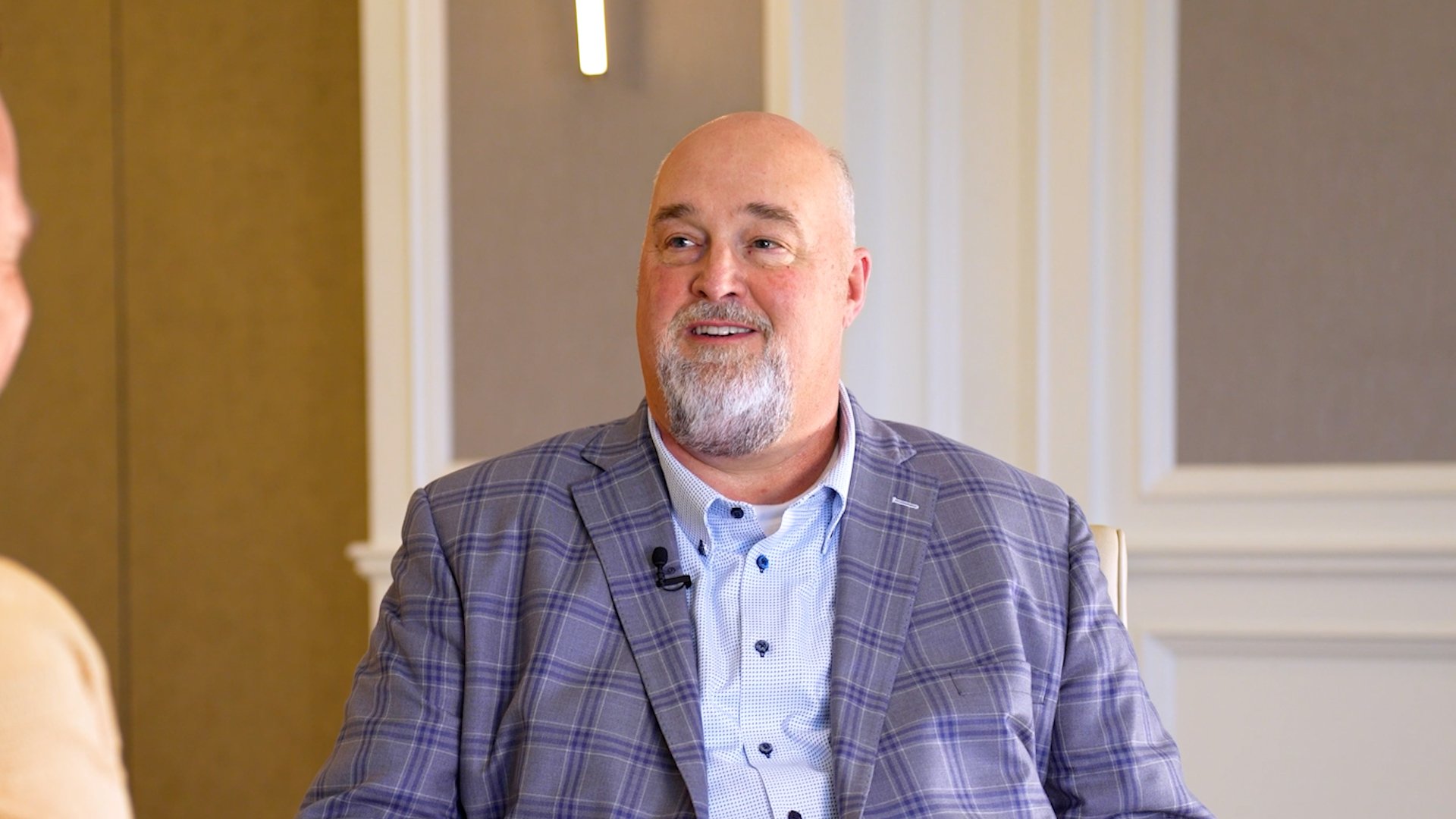
The electrical industry is evolving faster than ever, driven by workforce shifts, technological disruption, and new regulatory standards. At NEMA 2025, we spoke with Mike Yelton from Eaton to get his perspective on the biggest challenges manufacturers face today—and how companies are adapting to meet the demands of the next-generation workforce.
From AI and digital tools to talent development and compliance programs like Build America Buy America, Mike shares insights into how Eaton is navigating growth, innovation, and the changing customer journey.
When you think about the challenges manufacturers are facing today, what comes to mind?
Skilled labor availability is a topic first of mind. And then there's a lot of growth, so the infrastructure. We can help with the infrastructure to get there, but in some cases the infrastructure is not there for us to be able to expand as readily as we would like to meet growing customer needs.
Workforce change is a major topic. With half of the electrical workforce expected to retire in the next 5–10 years, how is Eaton thinking about connecting with the next generation of employees?
It's critical, and it's not just critical tomorrow. It's already critical today to make sure that you can recruit and retain the best in the industry. Where you spend your time, how you market yourself, the training tools that you make available to your teams.
And then, the stickiness as an employer. It's not just a place to work; they're wanting a place that has an impact on the environment, that's socially responsible. I would say development needs and how we're developing an employee is a priority much earlier in their career.
Many Gen Z tradespeople are discovering products and engaging with brands differently than previous generations. How does this affect manufacturers?
How they recruited before, it was:
- Can I get in?
- Can you send a salesman over again?
- Where can I research this?
- Do you have a catalog?
- Has my job started?
- Where is it in the process?
- Are the engineering drawings complete?
- Has all the material been received?
Those were questions that we fielded not that many years ago.
Now, there are some statistics like 30% of the research is done online before they ever even click to have access to someone or before they consider entertaining a discussion with a potential solution provider, like Eaton.
Agentic AI is playing a growing role in how electricians find information. How is this disrupting the industry?
If you speak to how it's disruptive, you'd also have to speak to the benefits of it. Clearly, it's a different approach to learning. You can date yourself now by saying, 'I did a Google search’ or ‘I did a Bing search for this’ because that's not what others are doing today.
It's a quicker gathering of information. You've got to control your sources, so getting good at the prompts and asking the questions. That's how you leverage it.
We're introducing agentic AI in designing products and stuff. It's making our engineers more productive, and there are still several more gains that we can make in that space.
How is Eaton evolving to connect with this new generation of tech-savvy customers?
There have been changes, and there will continue to be changes. I would say, making information more readily available and increasing transparency. Not just before the process, for quotes or for things like that, but even during the process.
Customers are looking for opportunities to look into our factories, not to call a support center or even to query something. They want to be able to kind of look into:
That is information that’s been hidden in manufacturing systems in our sites in the past. And we've used alternate systems to harvest that data and make it available. We're moving to and migrating to portals and views into that information for our customers.
Innovation is moving fast in this industry. How does Eaton socialize new products and build awareness among customers?
We've got multiple forums. Our participation in NEMA is oftentimes an early place where we're either working specifications or working standards to drive that. But new product introduction and new product development are a big part of what we do and a large part of our growth.
We use multiple forums to get our products out there, from basic marketing activities to others that are much more targeted with industry groups. We also gather a lot of VOC or voice of customer around our products that is segment-specific or industry-specific, and then bringing that back and broadcasting it out.
Social media is increasingly part of the customer journey. How do you see it shaping awareness and engagement?
Social is already becoming a bigger part. I think it'll just continue to expand. I think people started social with “Whom do I contact?” “Where do I go?” and then you move to, “Can I learn more about the product?”
When you say social, it's really kind of sharing your successes. You've got industry-specific segments, and I think we'll just see more and more specialty groups coming where there's sharing and forums.
The electrical industry is thriving with AI and data center growth. What are the key challenges for profiting from this macro environment?
It is a great time to be in the electrical industry. I love to say it's a great time to be in the electric industry, even better time to be part of Eaton. But the industry is not without challenges or issues today. There are some rising costs. There are some tight labor shortages.
The growth that we're seeing in this industry, it compounds year over year. Eaton’s investing over $1 billion in our capacity today. But if our suppliers don't invest, if we don't have the right communications and partnerships with those suppliers, we won't be able to meet the commitments that we're making to the industry.
Tariffs instability is definitely an item for us to choose. We're really primarily in the Americas. At the same time, there are some components that globally are only available in a few places. We've been working on developing suppliers domestically even more than we did before, just to ensure that we shore up that supply chain and shore up our ability to consistently meet our customers' needs.
What are Eaton’s core strengths in navigating these industry dynamics?
Our scale, our ability to drive innovation and breakthroughs. And then really kind of leveraging the breadth of our portfolio. We've got a great business that has and will continue to invest to lead in the industry. As I mentioned earlier, over $1 billion of investment in capacity.
Beyond that, we've done some fairly significant acquisitions. In some cases, in technology. And in other cases, it's really to provide a broader solution to the customer. We're trying to support the trades and support the groups to make them more efficient and more effective at the site.
How is Eaton supporting the next generation of tradespeople entering the field today?
One thing I want to plug for Eaton: if you have an opportunity, get to one of our Power System Experience Centers (PSEC). We do a lot of training, and we do that with young STEM students in high school to try to drive interest. I love to spend time with those.
Beyond that, we're investing in trade schools. With our existing employees, we're helping upskill that workforce. So we do in-house and third-party training there.
More broadly in the industry, we're involved in trade associations like this. We do lunch and learns. Our application engineer network that's out there helps a lot of customers with specifications. They oftentimes spend time educating the broader industry support for Eaton in our channel and our distributors in the area.
Eaton was an early participant in the Build America Buy America (BABA) certification. How has that progressed?
We were one of the initial wave of certified locations. I love the program because I think it does something for the industry that the industry needs even more today in this turbulent trade time.
It's a standards-based program, which is NEMA is great at. And it's a certification program where we can actually bring them in, certify the site, certify their capabilities, and we'll continue to expand and invest there because I think it helps our customers in selection. And as NEMA certifies more, it'll help us with our supply base.
The transparency of the program and that it's standards-based — it just makes it really clear-cut.
Trade Hounds is adding the Make It American™ mark to app search, making it easy to find BABA-compliant products. How will this certification help electricians and contractors discover certified products on the job?
As a program continues to scale, links like that are just going to assist the customers in ensuring they comply with the requirements of their job, but also finding the certified suppliers that they're looking for to meet their needs.
This is going to tell them things about our supply chain, it’s going to tell them things about our capability. It's also going to provide information about the risk management in the supply chain of that supplier based on this certification.
I'm really pleased with NEMA’s efforts, and we're glad to be one of the initial certified locations.
Final Thoughts
As the industry continues to grow and change, manufacturers that embrace technology, invest in their workforce, and provide transparency will be best positioned for long-term success. Eaton’s approach—from early career engagement and trade school partnerships to leveraging AI for smarter solutions—offers a roadmap for staying ahead in a competitive market.
Want to hear more? Watch the full interview with Mike Yelton for a deeper dive into how Eaton is shaping the future of the electrical industry.
Subscribe for the latest updates